
Why Physical Furniture Photography Still Beats CGI
Trust, Accuracy, and Real Results
Computer-generated images (CGI) and furniture photography look futuristic. It is fast. It is convenient. It enables building an entire catalog before a single product rolls off the line. Digital sofas, artificial rooms, and polished renders are everywhere today, especially in retail and e-commerce.
But here is the truth.
CGI still cannot replace real furniture photography when accuracy, trust, and buyer confidence matter. Not even close. If a customer is deciding whether to buy a two-thousand-dollar sofa or a complete dining collection, they want to see the real thing under real light. They want to see real texture and accurate color, not an interpretation of it.
This is precisely why Dallas Furniture Photography focuses on in-studio photography. CGI has its place, but real furniture deserves real photography.

What CGI Furniture Photography Really Is
CGI uses computer-generated models of your furniture. A digital artist creates the shape, maps the fabrics, assigns wood tones, simulates lighting, builds a virtual room, and then renders the image.
CGI works well when:
The furniture has not been manufactured
You need many color variations
You want a fast digital catalog
You do not want to ship physical samples
It can be a helpful tool. But CGI is only a simulation of reality. Photography is reality. Buyers know the difference even if they cannot explain why.
Why Physical Furniture Photography Still Wins
This is not about preference. This is about physics, accuracy, and buyer behavior.
1. Texture Accuracy Cannot Be Digitally Replaced
Furniture is a tactile product. Customers judge with their eyes long before they ever sit down.
Real photography captures:
fabric weave in its true scale
accurate velvet nap
natural wrinkling in leather
stitching depth
actual wood grain without repeating patterns
realistic matte or shine across materials

CGI consistently struggles here.
- Velvet often appears plastic.
- Boucle loses dimension.
- Leather looks airbrushed.
- Wood grain repeats in perfect loops that never happen in nature.
- Texture accuracy is one of the top drivers of furniture returns.
Only physical photography shows the real surface.
2. Real Light Creates a Mood That CGI Cannot Produce
Light is not a filter. Light is emotion. In Dallas-Fort Worth (DFW) and the broader DFW market, mood is a primary driver of furniture sales. Buyers want to imagine the furniture in a real Texas home. They like warmth, shadows, softness, and atmosphere. Only real light can produce that.
In the DFP studio, light interacts with materials in ways that cannot be replicated digitally. Real light:
wraps naturally around edges
picks up micro-textures
scatters into fibers
reflects across glass and metal in irregular shapes
produces natural color transitions that feel human

CGI lighting produces:
uniform highlights
symmetrical shadows
reflections that feel synthetic
color temperatures that do not behave like real light
a sterile and “too perfect” environment
Your buyer may not articulate the difference, but they instinctively trust real light over simulated light.
3. Photography Builds Trust Because It Shows Real Products
Shopify and other e-commerce studies confirm that conversion rates increase when buyers feel the imagery is honest and realistic. Source for verification: https://www.shopify.com/blog/ecommerce-seo
CGI often looks slightly too smooth or too perfect. That creates hesitation. Real furniture photography removes uncertainty and increases confidence. It shows what the buyer will actually receive. That reduces returns, increases click-through rates, and drives repeat business.
This is especially important for DFW customers who often shop online before visiting a local Dallas or Fort Worth showroom.
4. Color Accuracy Protects Your Brand Reputation
Color is one of the most significant problems in CGI furniture imagery.
Digital textures often fail to match the fabric samples. Undertones shift. Warm tones can become cool, and vice versa. Wood finishes appear redder or more yellow than they actually are.
Photography anchors color to the real swatch under controlled studio lighting. This keeps the final image honest, especially for retailers across Dallas, Mansfield, Arlington, and Waxahachie who need accurate e-commerce listings to reduce customer complaints.
Wrong color equals returns. Accurate color equals trust.
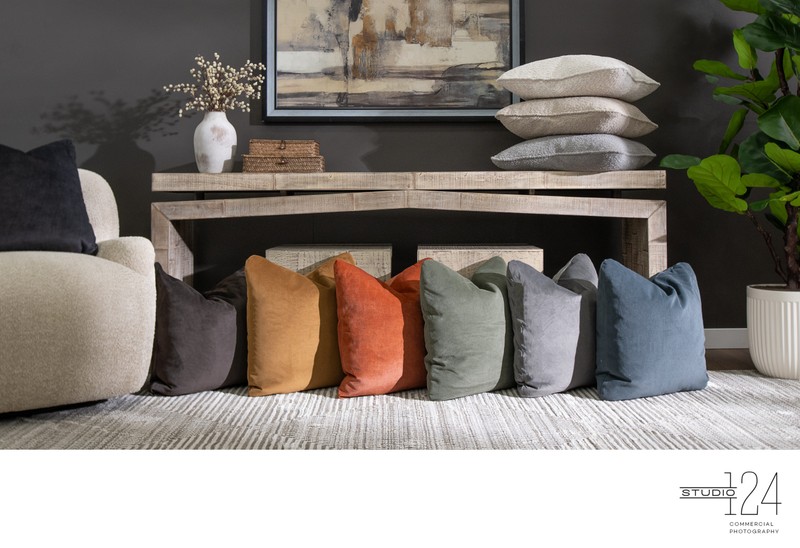
5. Lifestyle Photography Feels Human. CGI Does Not.
CGI interiors are clean and modern, but they feel artificial.
They lack atmosphere and emotion.
Real lifestyle photography shows:
Depth
Warmth
Shadows that fall imperfectly
Texture in the room itself
The feeling of a home rather than a software model
Lifestyle imagery consistently outperforms in social ads, catalog hero images, and long-form brand storytelling. It builds emotional connection. It increases engagement. Customers are not just buying a sofa. They are buying the feeling of the room it sits in. Real photography creates that feeling.

6. CGI Requires Perfect Inputs That Most Brands Do Not Have
To produce accurate CGI, a brand must provide:
True CAD files
Precise measurements
High-resolution fabric scans
Physical fabric samples
Finish data
Accurate textures for wood, leather, or metal
Most companies cannot provide this data at the level required for realism. Real photography needs only one thing. The actual furniture. This is why many national brands still ship their furniture directly to our studio in the DFW area. They want accuracy without modeling uncertainty.
Why DFW Brands Choose Real Photography
Dallas Furniture Photography serves furniture companies across Dallas, Fort Worth, Midlothian, Mansfield, Arlington, Cedar Hill, and the broader DFW metroplex. The DFW region is one of the fastest-growing furniture markets in the country, with manufacturers, warehouses, and retail partners relying on accurate visuals for online sales.
Local brands prefer real photography because:
Texas buyers value authenticity
Color accuracy matters in bright Texas homes
Products appear more high-end under real light
Lifestyle sets create a stronger emotional appeal
Showroom customers often compare images to in-person pieces
Real photography reflects how the product will actually look in a home environment.

Our Studio’s Authority and Expertise
Dallas Furniture Photography specializes exclusively in commercial furniture imagery. This is not a general photography studio. This is a production space built for large-scale furniture work.
Dallas Furniture Photography Capabilities include:
Full-scale room set builds
Controlled studio lighting
Lifestyle photography
Silo product photography for catalogs and e-commerce
Detail work for stitching, texture, and finishes
Accurate color capture
Full service styling and staging
Large furniture handling
Consistent angles for large SKU libraries
Brands ship furniture to our studio from across the United States because we deliver accuracy, consistency, and emotional impact that CGI cannot.
Where CGI Still Makes Sense
A fair and factual assessment.
CGI is helpful when:
furniture is not yet produced
Colorway expansions are needed
A brand needs hundreds of angles for a single model
A rapid digital catalog is required
These are valid uses. But they do not replace authentic photography when the goal is realism and trust.
The Bottom Line
CGI is a valuable tool. Physical photography is the standard.
- Real furniture.
- Real lighting.
- Real texture.
- Real mood.
- Real trust.
This is why Dallas Furniture Photography remains committed to authentic physical photography. It is the most accurate, most emotional, and most reliable way to represent the products you worked so hard to create.
The 2026 production calendar for Dallas Furniture Photography is now open!
Furniture brands typically reserve studio time three to six months before catalog season. If your company is launching new collections, updating e-commerce listings, or refreshing your brand visuals in 2026, now is the time to secure your dates.
Contact us to begin planning.
Your furniture deserves to be photographed the right way.